

Kirkus Book Review: WHY DID SHE JUMP?

Kirkus Book Review for WHY DID SHE JUMP?
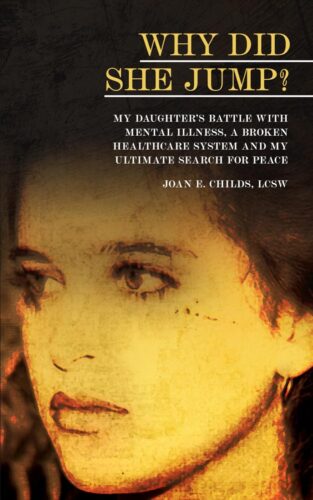
Licensed social worker Childs shares her experience with her daughter, who jumped to her death at 34 years old.
The narrative, which toggles between before and after the death of Childs’ daughter, Pam, begins in Pam’s final weeks when Childs excluded Pam from a family trip because she “feared her illness would take up all [her] time and attention.” Pam was experiencing hallucinations and was “convinced that her soul was being stalked by the Devil.” Childs could not find inpatient treatment for her daughter because she didn’t present as a threat to herself or others. After Childs left on her trip, Pam leaped to her death from her father’s 15th-floor apartment in Bal Harbour, Florida.
The author revisits her daughter’s “inappropriate and bizarre” behavior, from scatolia to her “surly and depressed” teen years. At 16, Pam moved in with her father. Childs claims “there had never been any overt sexual abuse,” but Pam allegedly felt “more like his surrogate lover than a daughter.” With her father’s encouragement and financial support, Pam became a clinical psychologist. But at 31, Pam was diagnosed with Bipolar I. Childs believes bipolar disorder was her daughter’s “executioner” and faults the dysfunctional health care system for Pam’s death.
After Pam’s suicide, Childs founds the Pamela Anne Glassman Educational Center and reports, “My life has moved forward in a fashion most people can only dream about.” Childs presents an unfiltered account of her pain, guilt, and search for understanding in the wake of her daughter’s death. She’s transparent about a wide range of feelings, from “bewildered and angry” to “stoic and detached,” while grieving.
The book also highlights the dire consequences of mental health bureaucracy. Readers may recoil, however, at the narrative’s insensitivity in descriptions of “spoiled” Pam’s “atrocious” personal hygiene, “flirtatious, wanton behavior,” and “unreasonable demands.” The chaotic narrative also goes on too many tangents involving Childs’ romantic partners, which detracts from Pam’s story.
A deeply painful, candid account of severe mental illness.
Share this article
Follow us
Latest articles

October 10, 2026

October 10, 2026

October 10, 2026